

WRAPS 2016 magazine, in its 2016 State of the Wraps Industry Report, states that 73% of the 140+ respondents to its survey said they experienced “significant increases in sales over last year”, and 60% anticipate wrap sales to increase next year for full and partial wraps. Approximately one-third enjoyed sales increases in excess of 20%. […]
Continue readingCategory Archives: Signs’ Advertising Value

What’s the Economic Difference Between Doubled- and Single-faced Signs?
When a Pier 1 Imports store opened in Germantown, TN (a suburb of Memphis) in 1991, it was granted a permit for a sign that faced west-bound traffic. However, no signage was visible to east-bound traffic. A few months after the store’s opening, sales were 25% below projections, despite typical promotions, advertising and direct mailings. […]
Continue reading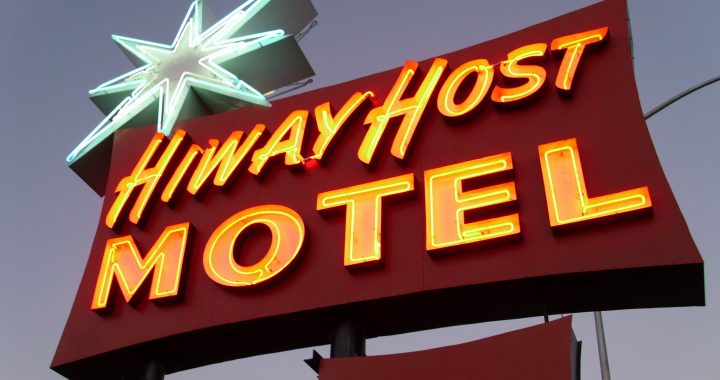
What Does Amortization Mean for Signage?
Amortization concerns the compensation for a sign that is no longer in compliance when a sign code changes. The theory is, if a sign is allowed to exist for a certain period of time, its owner would recoup their investment during a period prescribed by the local jurisdiction before the sign must be removed. This […]
Continue reading
Can a $500 Sign Generate $1.9 Million in Additional Revenue for a Health Clinic?
A Sarasota, Florida health-care clinic had a great suburban location, demographically. However, due to its location at the end of a two-story complex surrounded by oak trees, its fascia signage simply wasn’t visible from the interstate (0.2 miles away) or the four-lane frontage road with a median. The owner had a dozen other clinics, so […]
Continue reading
Duke University Economic Professor Applies “Game Theory” to Signage
David McAdams, an economics professor at Duke University, has authored a paper entitled “The Economics of On-Premise Signs” in conjunction with the United States Sign Council. In it, he contrasts the philosophies and ramifications of sign codes in Henrietta and Brighton, New York — two communities with similar demographics, both of which are near Rochester, […]
Continue reading
Do Signs Help First-time Customers Find Stores?
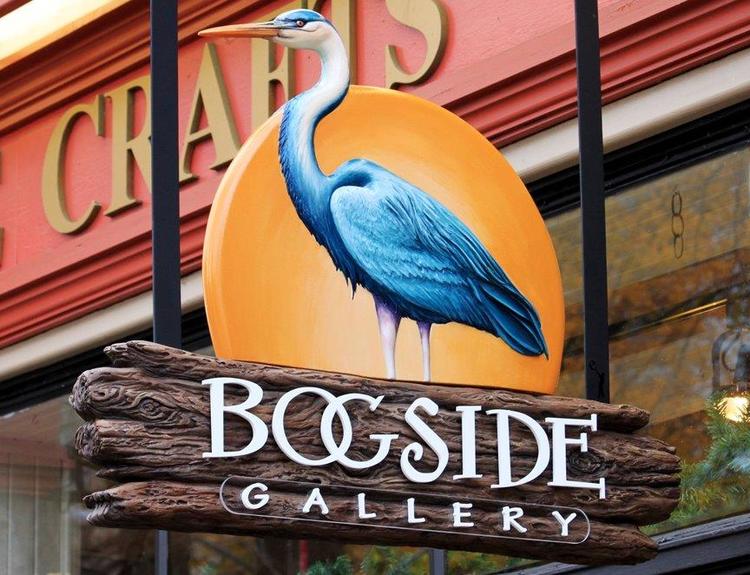
Signtronix is a California-based sign manufacturer that creates signs for small independent businesses nationwide. From 1996 through 2011, it asked its customers (retailers) to ask their first-time customers (shoppers) how they first found out about their store. Over this 14-year period, 46% of these 13,040 first-time patrons said they’d heard about the retailer because of […]
Continue reading
Does a Sign Loss Hurt Multiple Businesses and the Community?
In the mid-1990s, Terry Shulman’s was a successful drug store in the Gulf Gate Mall in Sarasota, Florida. Located in the back side of the mall, it couldn’t be seen from either of the two major arterial roads. However, it paid $3,500 for a freestanding pole sign. Its retail sales had increased 10-18% since it had relocated to […]
Continue reading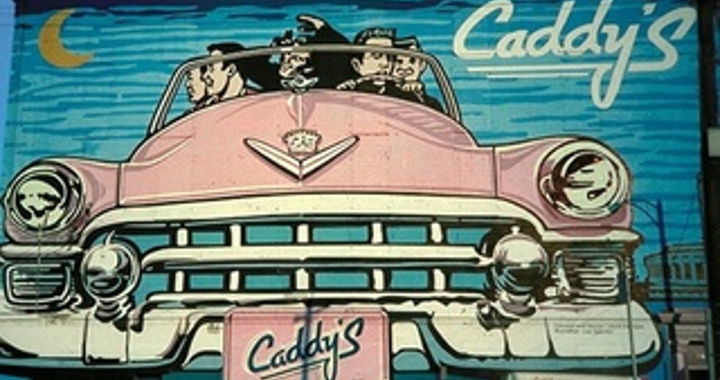
Can a Sign’s Location Make it Worth $1.8 Million?
In Cincinnati, OH, a building was ideally situated on Pete Rose Way, proximate to the confluence of I-71 and I-75. In 1997, the building housed Caddy’s, a 50s style entertainment complex. The Cincinnati Bengals NFL football team was about to build its $400 million Paul Brown Stadium, and the land and building were being taken by […]
Continue reading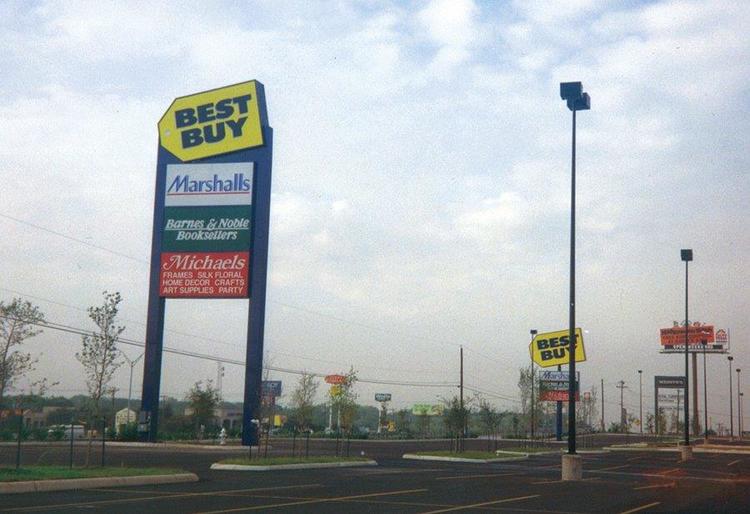
Can a Grand Opening Without a Sign Directly Cause Loss of Revenue?
On August 18, 1995, a Best Buy store was set to open in San Antonio. By contract, the store was to receive two double-faced pylon signs that faced I-470 by June 1. One 297-sq.-ft. sign did become fully operational the day before the grand opening. The second, 207-sq.-ft. sign, however, didn’t become operational until September […]
Continue reading