

Conspicuity for signage is determined by the contrast between the sign and its background. A sign must be conspicuous first, because, without it, the sign’s legibility and readability are moot points. While the appropriate size for signs is addressed on this website under the heading “How big should a sign’s letters be?”, conspicuity includes factors […]
Continue readingCategory Archives: Sign Questions Answered
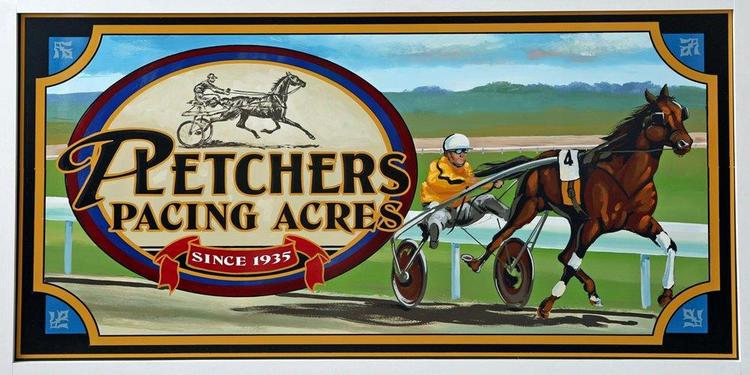
Do Wall Murals Benefit Small Towns?
The Walldog Festival movement began more than two decades ago when more than 100 signpainters descended upon Allerton, IA, on July 30- August 1, 1993. In addition to restoring an eight-year-old painted wall mural, they created seven other hand-painted murals. Currently, the vast majority of non-electric signs are created with computer-cut vinyl or digitally printed […]
Continue reading
What Has the Supreme Court Said About On-premise Signage?
Supreme Court cases that involve on-premise signage The 1st Amendment Congress shall make no law respecting an establishment of religion, or prohibiting the free exercise thereof; or abridging the freedom of speech, or of the press; or the right of the people peaceably to assemble, and to petition the government for a redress of grievances. […]
Continue reading
How Big Should a Sign’s Letters Be?
Signs need to be legible and readable, for both pedestrians and motorists. But the safety consideration becomes paramount for the latter. Consequently, the Federal Highway Administration (FHWA) sets minimum standards for the letters that appear on the interstate signs that say “Cincinnati” and “Second St.” and “Next Exit.” These standards are outlined in the FHWA-produced […]
Continue reading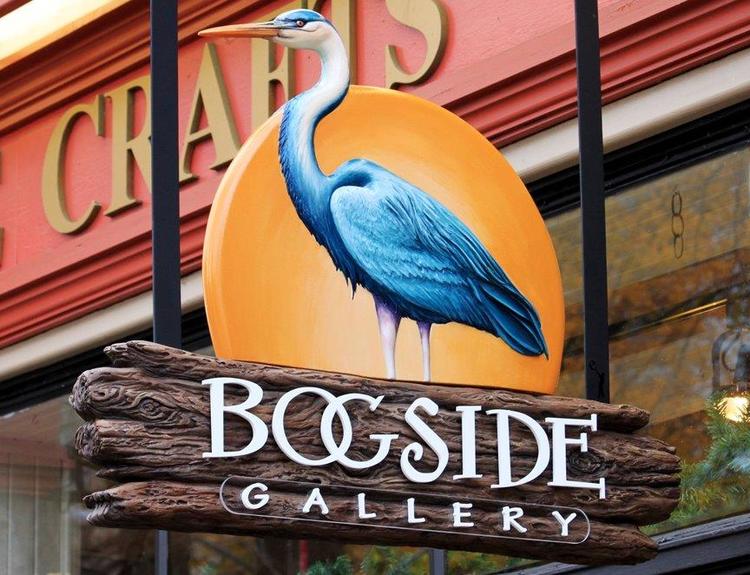
Do Signs Help First-time Customers Find Stores?
Signtronix is a California-based sign manufacturer that creates signs for small independent businesses nationwide. From 1996 through 2011, it asked its customers (retailers) to ask their first-time customers (shoppers) how they first found out about their store. Over this 14-year period, 46% of these 13,040 first-time patrons said they’d heard about the retailer because of […]
Continue reading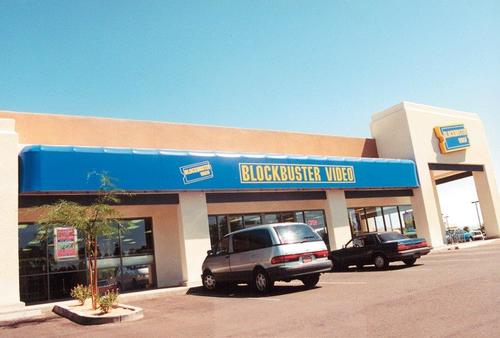
How Does the Copyright Protection of the 1982 Lanham Act Affect Signs?
The Lanham Act, also known as the Trademark Act, was originally passed in 1946. It has been revised several times since then, including 1982, when it was revised by Sen. Orrin Hatch (R-UT) to prevent cities/municipalities from requiring businesses to alter federally registered trademarks. Section 1121(b) of the act states: “No state or other jurisdiction of […]
Continue reading
Is Your Sign Code Content Neutral? Reed v. Gilbert Warns it Should Be
Quite often, sign codes are primarily governed by their definitions. Many of the definitions are about types of signs: temporary, projecting, banners, fascia, freestanding, pole-mounted, etc. Quite often, however, signs are defined by their content: political, real estate, commercial, yard sale, etc. If a sign is blank, you can still tell what kind of sign it […]
Continue reading
Does a Sign Loss Hurt Multiple Businesses and the Community?
In the mid-1990s, Terry Shulman’s was a successful drug store in the Gulf Gate Mall in Sarasota, Florida. Located in the back side of the mall, it couldn’t be seen from either of the two major arterial roads. However, it paid $3,500 for a freestanding pole sign. Its retail sales had increased 10-18% since it had relocated to […]
Continue reading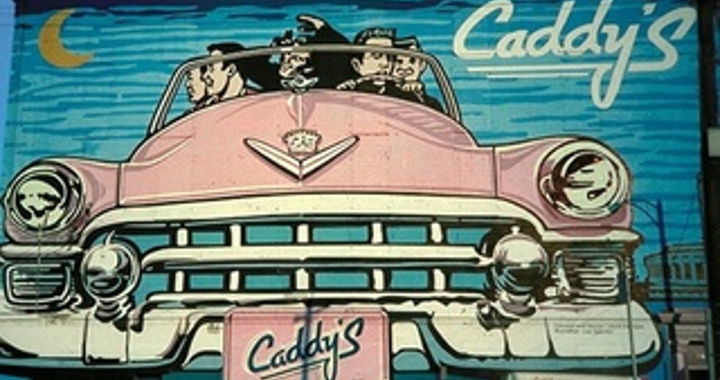
Can a Sign’s Location Make it Worth $1.8 Million?
In Cincinnati, OH, a building was ideally situated on Pete Rose Way, proximate to the confluence of I-71 and I-75. In 1997, the building housed Caddy’s, a 50s style entertainment complex. The Cincinnati Bengals NFL football team was about to build its $400 million Paul Brown Stadium, and the land and building were being taken by […]
Continue reading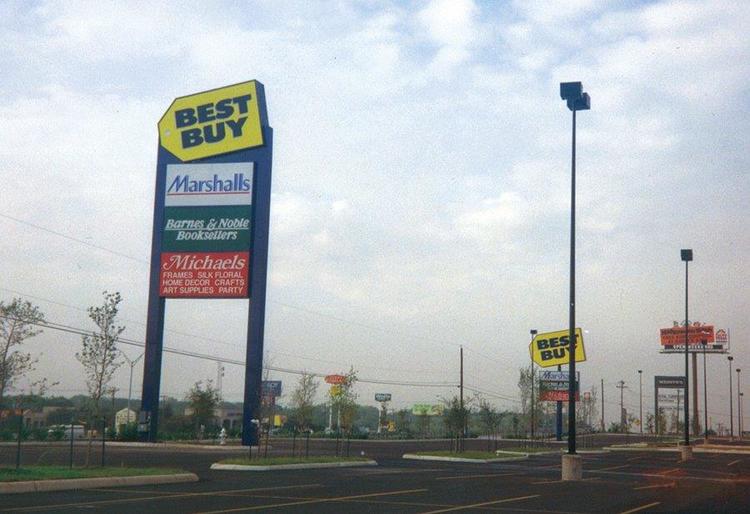
Can a Grand Opening Without a Sign Directly Cause Loss of Revenue?
On August 18, 1995, a Best Buy store was set to open in San Antonio. By contract, the store was to receive two double-faced pylon signs that faced I-470 by June 1. One 297-sq.-ft. sign did become fully operational the day before the grand opening. The second, 207-sq.-ft. sign, however, didn’t become operational until September […]
Continue reading