

Law professor Alan Weinstein, a board member of the newly formed Foundation for the Advancement of the Sign Industry, was one of three people associated with sign-industry groups who spoke at a session on sign regulation at the American Planning Association annual conference, April 4, 2016, in Phoenix, Arizona. Speakers at the session, entitled “Regulating […]
Continue readingCategory Archives: 1st Amendment / Freedom of Speech

What Has the Supreme Court Said About On-premise Signage?
Supreme Court cases that involve on-premise signage The 1st Amendment Congress shall make no law respecting an establishment of religion, or prohibiting the free exercise thereof; or abridging the freedom of speech, or of the press; or the right of the people peaceably to assemble, and to petition the government for a redress of grievances. […]
Continue reading
Is Your Sign Code Content Neutral? Reed v. Gilbert Warns it Should Be
Quite often, sign codes are primarily governed by their definitions. Many of the definitions are about types of signs: temporary, projecting, banners, fascia, freestanding, pole-mounted, etc. Quite often, however, signs are defined by their content: political, real estate, commercial, yard sale, etc. If a sign is blank, you can still tell what kind of sign it […]
Continue reading
SGIA Journal Features FASI Article on the Reed v. Gilbert Aftermath
Wade Swormstedt, the Executive Director for FASI, wrote an article for the SGIA Journal’s January/February 2017 issue entitled “Content Neutrality and Signs: The Reed v. Gilbert decision and the aftermath.” Although the actual article is only available online to subscribers, the basic copy is presented here. On June 18, 2015, the Supreme Court of the […]
Continue reading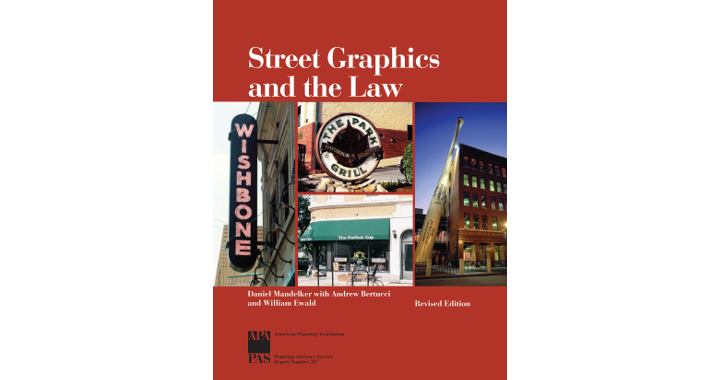
Street Graphics Continuing Tragedy
The revision’s major purpose is skirting First Amendment rights. The following article originally appeared in the January 24, 2005 issue of Signs of the Times magazine. By now, you may be sick of reading about the American Planning Assn.’s (APA) third version of Street Graphics. This will be the third consecutive month with coverage (the […]
Continue reading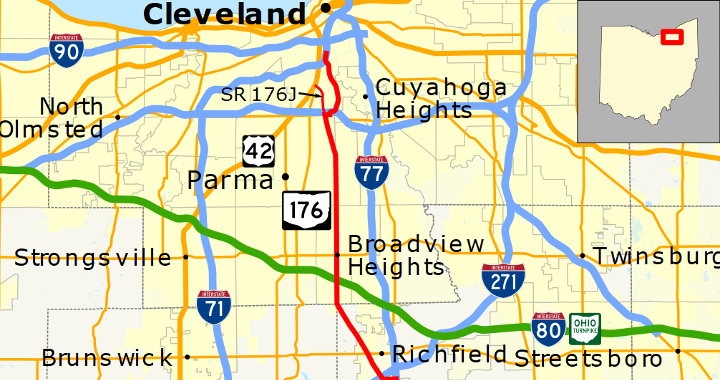
How Broadview Heights, Ohio Ignored Content Neutrality
In terms of ignoring “content neutrality,” call it “North Olmsted, Part II.” The following article, written by FASI Executive Director Wade Swormstedt, originally appeared in the April 2004 issue of Signs of the Times magazine. Broadview Heights, OH, is roughly 21 miles away from North Olmsted, OH. In terms of First Amendment ignorance (or perhaps […]
Continue reading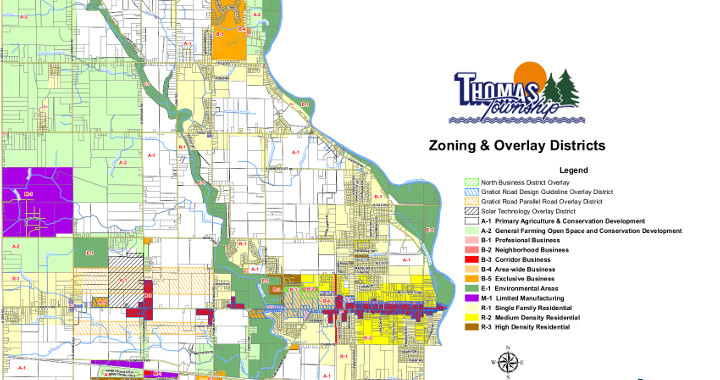
Content Neutrality Violations Noted in Michigan
The landmark content-neutrality/prior-restraint ruling from North Olmsted is cited in Thomas Township. The message cannot determine the medium. With modest apologies to Marshall McLuhan, when the medium is signage, the courts have bestowed kid-glove treatment upon content neutrality, while wholeheartedly endorsing the tenets of North Olmsted (see ST, December 1999, page 52, and April 2000, […]
Continue reading
Court Overturns Madison, WI Ban on Portable Signs
This article, written by sign-code expert, John Gann, originally appeared in the September 2002 issue of Signs of the Times magazine. Madison, WI, has been rated by Money magazine as the best medium-sized city in the United States. The city owes its amenities not only to nature and the generosity of taxpayers, but also […]
Continue reading
Reconciling Santa Monica’s Ban on Pole Signs
The contentious code — which eliminates all pole signs — takes effect This article, written by Jennifer Flinchpaugh, originally appeared in the May 2000 issue of Signs of the Times magazine. No projecting signs. No upper-level signs. No roof signs. And no off-premise signs. Certainly Santa Monica, CA’s sign code, adopted in 1985 and scheduled […]
Continue reading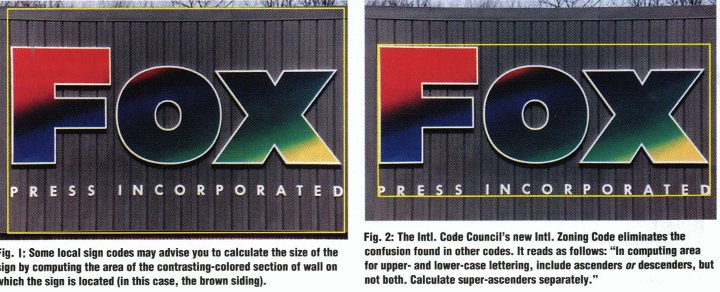
How USSC and ISA Jointly Improved the Intl. Zoning Code
After two years of collaborative effort, the ICC, ISA and USSC release the Intl. Zoning Code’s new-and-improved sign chapter The following article originally appeared in the January 2000 issue of Signs of the Times magazine. By Jennifer Flinchpaugh “An estimated 80,000 communities could have adopted the ICC’s zoning code and, by default, the problematic sign […]
Continue reading