

The following is excerpted from a pamphlet that was published in 1983. As a member-service project, the National Electric Sign Association (now the International Sign Association) has teamed up with a well-known researcher to produce a 22-page study that underlies the importance of the on-premise sign. Here is an encapsulation of Ray Anderson’s findings, which were […]
Continue reading
The Dollar and Cents Value of the On-Premise Sign
The following article originally appeared in the February 1977 issue of Signs of the Times magazine. By R. T. Anderson, Director of Research, National 3M, Bedford Park, Ill. This is the first of three comprehensive installments being presented as a service to the sign industry in general and to individual sign salesmen in particular. Based […]
Continue reading
Senator Orrin Hatch Discusses Signs and Property Rights
Excerpts from Sen. Orrin Hatch’s keynote address at the National Sign Users’ Conference on Sign Regulation and Marketing The following article originally appeared in the August 1998 issue of Signs of the Times magazine. By Wade Swormstedt “I believe government regulation [of signs] has been burdensome, often times unconstitutional.” At the Intl. Sign Assn.’s (ISA) […]
Continue reading
First Amendment Aspects of Takings
The following article originally appeared in Signs of the Times magazine. By Karen E. Claus, JD Phd This month, the author examines the First Amendment aspects of takings by looking at the cases of Linmark Assoc., Inc. et. al. v. Township of Willingboro et. al., which concerned real-estate signage. and Omni Outdoor Adv Inc. v. […]
Continue reading
Supreme Court Ruling Strengthens Just Compensation
The following article originally appeared in the August 1987 issue of Signs of the Times magazine. The Fifth Amendment guarantees that private property shall not “be taken for public use, without just compensation.” Those words have caused much heated debate and litigation ever since they were written. In a 6-3 decision on June 9, 1987 the Supreme […]
Continue reading
Bob Aran Reflects on 30-year Sign-Legislation Career
The following article originally appeared in the February 2004 issue of Signs of the Times magazine. Were you an attorney first, who became interested in sign codes, or did you have an interest in signs that ended up being sign-code based? I majored in interpersonal relationships (literary related) during my undergraduate work at Pepperdine University. […]
Continue reading
Fundamental Color Theory
How to enhance sign design with color The following article originally appeared in the April 1998 issue of Signs of the Times magazine. By Mark Baty and Jennifer Flinchpaugh For most artists, their first active experience with color was scribbling between the black lines in a coloring book with their favorite colored crayon. As our […]
Continue reading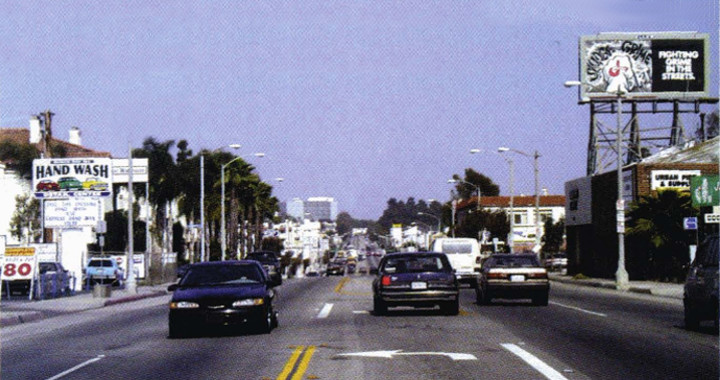
Establishing the Worth of an On-Premise Sign
How to apply the market-comparison and cost-of-replacement valuation methods to an on-premise sign This article originally appeared in the October 1999 issue of Signs of the Times magazine. By Dr. R. James Claus and Thomas A. Claus In last month’s column, we examined a car wash’s new, $15,000 pole sign and began assessing its economic […]
Continue reading
National Academies’ Nighttime Overhead Signage Luminance Levels
The National Academies Press issued an 80-page report, in May 2017, entitled “Guidelines for Nighttime Overhead Sign Visibility.” It includes a chart headlined “Luminance Levels for Overhead Signs.” It lists five different visual complexity levels, ranging from a dark rural area to a commercial downtown district. It then suggests minimum luminance levels in terms of candelas per square foot and […]
Continue reading
Texas/Pennsylvania DOT Studies Says Clearview Font Improves Sign Legibility
A study conducted jointly by the Texas and Pennsylvania Departments of Transportation in April 2006 concluded the Clearview font increased the visibility distance for drives by 12% versus the existing Series E Modified font. In 1994, the Federal Highway Administration determined highway signs were no longer visible enough for a population that included older drivers. Over the next […]
Continue reading